
Let Reuben Live: When Failure Doesn’t Have the Final Word
“Let Reuben live, and not die; and let not his men be few.” — Deuteronomy 33:6
Some moments in Scripture carry the weight of an entire story in a few words. Moses’ words concerning Reuben are one of those moments: “Let Reuben live.”
Moses is nearing the end of his life. He is blessing the tribes of Israel, and when he reaches Reuben, he offers a prayer for life and preservation. The prayer’s simplicity is striking, especially when we remember Reuben’s history. As Jacob’s firstborn, Reuben carried significant expectations, yet Genesis 49:3–4 records his instability and failure. His actions had consequences, and his position was affected.
Yet centuries later, Moses is still praying for Reuben.
That tells us something important about grace: a person’s failure can become part of their story without becoming the entire story.
Psychologically, one of the most damaging things that can happen to a person is for a mistake to become an identity. A person fails, disappoints someone, makes a poor decision, or experiences a difficult season, and eventually they begin to define themselves by what went wrong. Sometimes other people reinforce that identity by continually reminding them of who they used to be.
But Scripture presents a different possibility.
Grace does not require us to pretend that failure never happened. It does not eliminate accountability or erase consequences. Rather, grace declares that failure does not have the authority to determine the entirety of a person’s future.
That is why Moses’ prayer is so powerful.
“Let Reuben live.”
He does not pray first for prominence, power, wealth, or influence. He prays for life.
This is especially relevant to the church today. We live in a culture that often measures worth through productivity, visibility, success, and achievement. Unfortunately, those values can enter our spiritual communities as well. We can become so focused on programs, numbers, positions, and performance that we forget to ask whether the people within our churches are actually alive spiritually, emotionally, and relationally.
There are still attending church but have become disconnected internally. There are leaders who continue serving while carrying deep exhaustion. There are young people who have not necessarily rejected God but have become uncertain about whether they have a meaningful place within the church. There are ministries that appear active on the outside while quietly losing their sense of purpose.
Perhaps our prayer needs to change.
Before we ask God to make our ministries bigger, perhaps we should ask Him to make them alive.
Let the church live. Let prayer live. Let compassion live. Let our mission live. Let our faith live.
Jesus said, “I am come that they might have life, and that they might have it more abundantly” (John 10:10). Biblical life is therefore more than simply existing. It is the capacity to participate in God’s purposes with hope, meaning, and spiritual vitality.
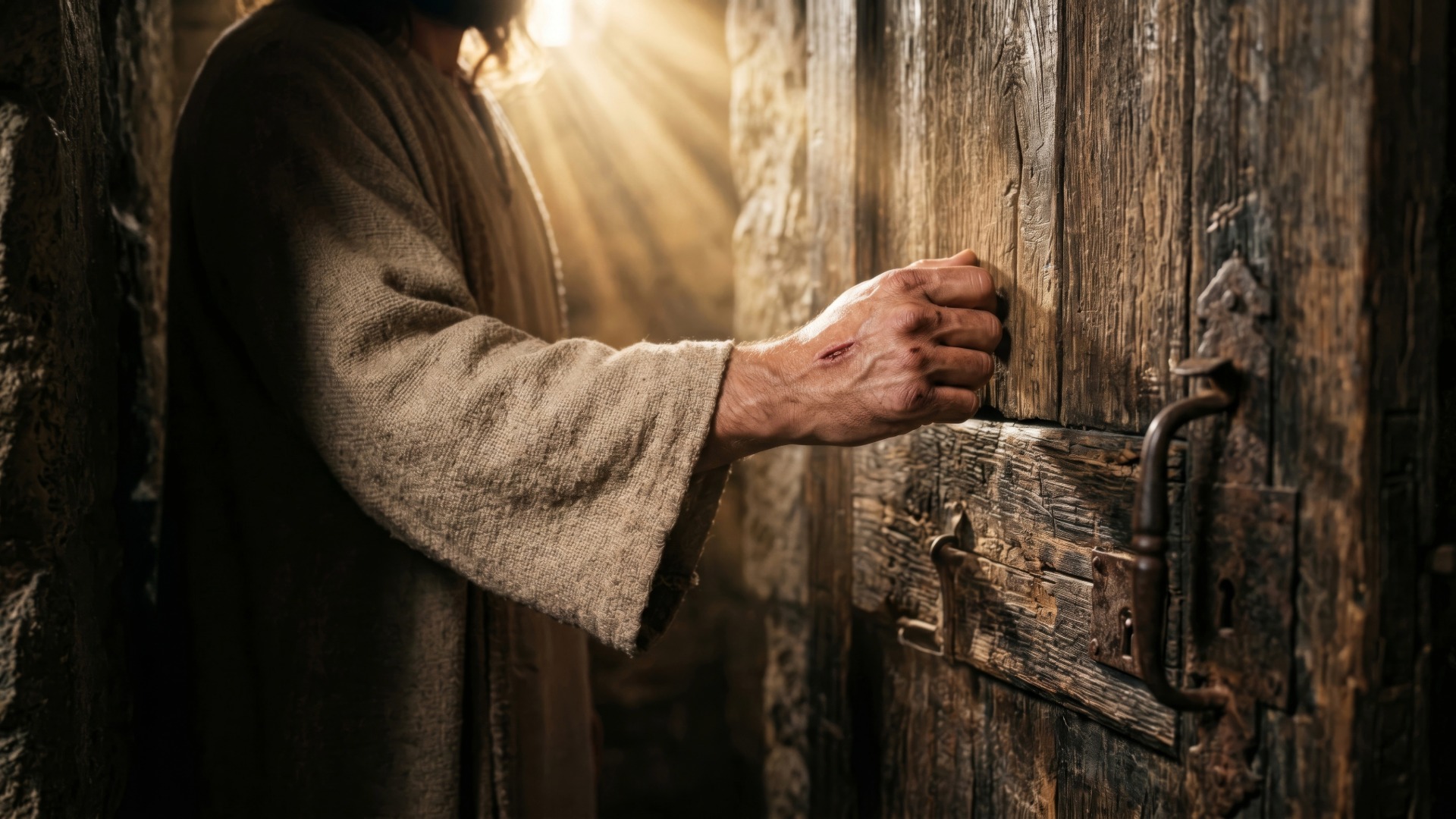
This is where theology and psychology intersect. Human beings are deeply influenced by the environments in which they live. Repeated rejection can shape confidence. Prolonged discouragement can affect motivation. Constant criticism can alter how people understand themselves. When people continually encounter closed doors, eventually they may stop knocking.
The church, therefore, has a responsibility to create environments where people can encounter both truth and grace, where accountability exists, but restoration remains possible; where maturity is expected, but mistakes do not automatically result in permanent exclusion.
Moses’ prayer also moves beyond survival: “Let not his men be few.”
The blessing is not simply that Reuben would remain alive. It is that Reuben would continue.
That introduces the question of continuity.
A healthy church should not only ask, “How do we preserve what we have?” It must also ask, “What are we preparing for the people coming behind us?”
Every generation has a role in the future of the church. Older leaders carry experience, institutional memory, and wisdom gained through years of service. Emerging leaders bring new perspectives, energy, questions, and possibilities. The goal should not be to create conflict between generations but to create space where generations can learn from one another.
The church should not be merely preserving yesterday while praying for tomorrow. It should be preparing tomorrow while honoring yesterday.
That requires intentional mentorship, meaningful opportunities for emerging leaders, healthy transitions, and organizational systems that allow people to develop rather than remain permanently on the margins. Continuity does not happen accidentally. It must be cultivated.
Perhaps this is one of the deepest implications of “Let Reuben live.” We should be careful not to declare something dead simply because it is wounded, struggling, or changing.
Sometimes we prematurely bury people because of their past. We bury ministries because they have become difficult. We bury young leaders because they lack experience. We bury churches because their numbers have declined. We even bury parts of ourselves because of mistakes we made years ago.
But difficulty is not always death.
Some things need correction. Some things need restructuring. Some things genuinely need to end. Yet other things simply need restoration, renewed vision, and the breath of God.
The challenge is learning to discern the difference.
And perhaps that is why this prayer is so relevant for a Week of Prayer Committee. Our responsibility is not simply to organize events. It is to intercede for life.
We pray for those who are weary. We pray for those who have failed and need restoration. We pray for young people searching for purpose. We pray for leaders who need renewal. We pray for ministries that need fresh vision. We pray for churches that are struggling to find their way. And we pray for the generations that will inherit the work after us.
“Let Reuben live.”
It is a prayer of preservation, but it is also a declaration of hope.
Reuben had a history, but he also had a future. His failure was real, but it was not final. His past mattered, but it did not cancel God’s ability to continue working through his story.
Perhaps that is the prayer our generation needs to recover.
Not simply, “God, make us successful.” Not simply, “God, give us more.” But:
God, let us live.
Let us live with purpose. Let us live with faith. Let us live with psychological and spiritual health. Let our churches live. Let our ministries live. Let our compassion live. Let our mission live. And above all, let Christ remain alive at the center of everything we do.
Because the goal is not merely to survive another season.
The goal is to remain alive enough to participate in what God is doing next.