“For Jordan overfloweth all his banks all the time of harvest.” — Joshua 3:15
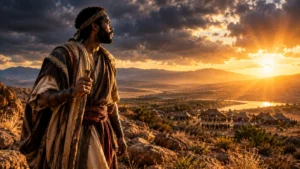
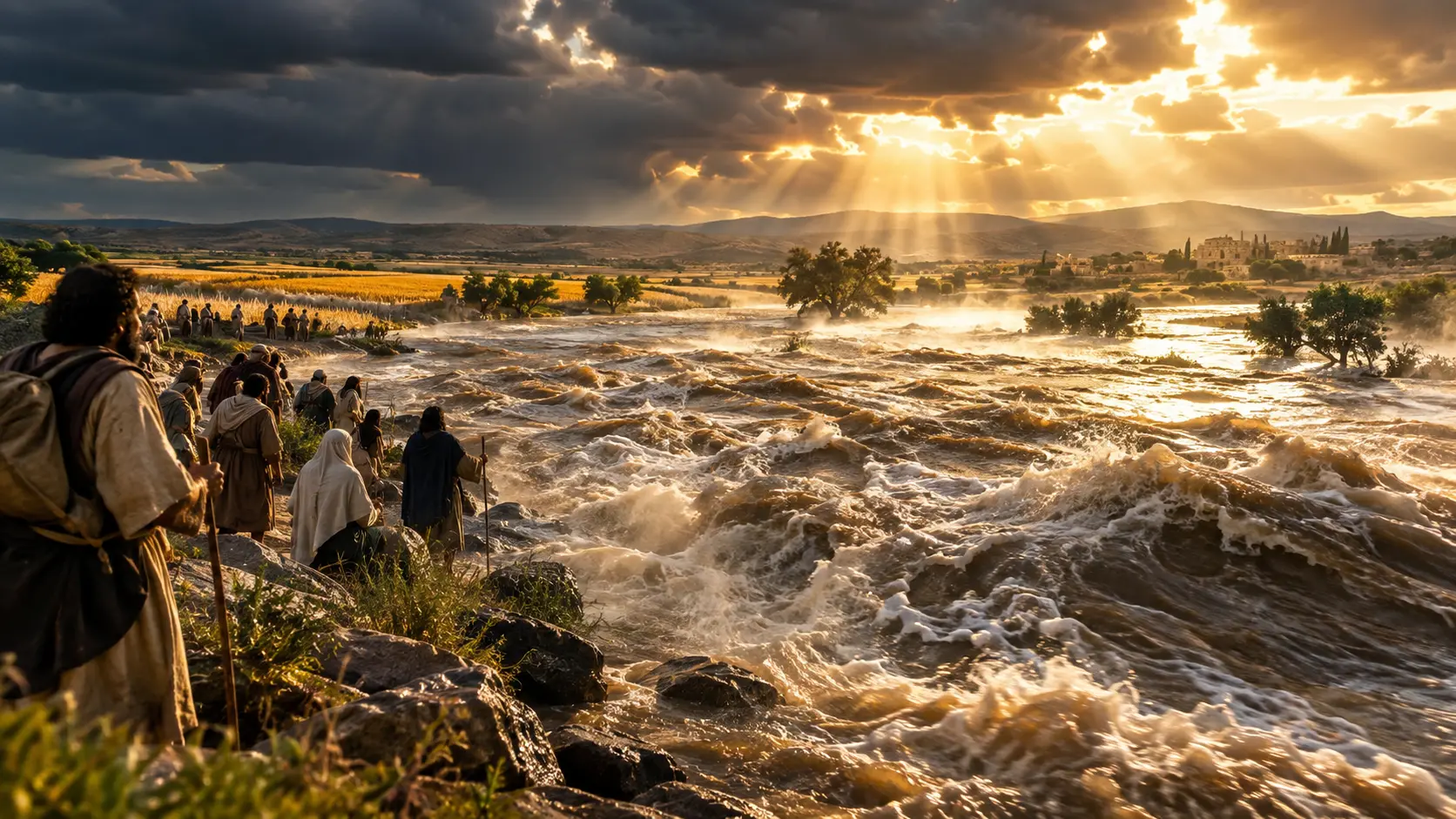
Israel had waited forty years for this moment. Moses was gone, Joshua had assumed leadership, and a new generation finally stood at the entrance to Canaan. Yet the Promised Land lay beyond a Jordan that was overflowing its banks. Historically, this was the harvest season, when the river could swell beyond its normal boundaries. The irony was striking. Israel had waited for the promise, only to find the obstacle at its greatest.
There is a psychological reality in that experience. Prolonged waiting can produce fatigue, anxiety, doubt, and frustration. When something we have anticipated for years finally appears within reach, an unexpected obstacle can feel especially discouraging. The mind begins to ask questions: Did I misunderstand God? Is this really the right time? Why would God bring me this far only to place a river in front of me?
Yet the swollen Jordan was not evidence that God’s promise had failed.
God commanded the priests carrying the ark to step into the water. The river did not stop while they stood safely on the shore. It stopped when their feet touched the water. The ark went before them, representing God’s covenant presence.
The promise was ahead, the river was between them, but God was in front of them.
That becomes even more meaningful when read Christologically. The ark points us toward the reality of God’s presence with His people, ultimately fulfilled in Christ—Immanuel, “God with us.” Israel did not cross because the river became harmless; they crossed because God’s presence went before them. In the same way, the Christian’s confidence is not that the journey will be without difficulty, but that Christ will not abandon His people in the difficulty.
Jordan itself becomes a recurring biblical symbol of transition. Israel passed through it into Canaan. Naaman entered its waters and came out cleansed. Elijah and Elisha crossed it in a prophetic transition. John the Baptist ministered beside it, preparing the way for Christ. Then Jesus Himself entered the Jordan and was baptized.
The typological connection is beautiful. Israel passed through Jordan toward an earthly inheritance; Christ entered Jordan to identify Himself with humanity and begin His redemptive mission. Israel’s crossing pointed toward entering Canaan; Christ’s ministry points toward the greater inheritance of eternal life. The Jordan therefore becomes more than a geographical river. It becomes a biblical picture of movement from promise toward fulfillment.
And there is a message here for the contemporary church.
We are living in an age of unprecedented information but increasing uncertainty. Wars, economic pressures, social fragmentation, technological disruption, moral confusion, and constant digital noise have created a culture that is psychologically exhausted. People are waiting for something to change waiting for stability, healing, justice, direction, and hope.
The church is waiting too.
For Seventh-day Adventists, that waiting has a specific focus: the second coming of Jesus Christ. We proclaim an Advent that is not merely an idea but a promise. Yet waiting can become spiritually dangerous when anticipation turns into fatigue. We can become so accustomed to waiting that we stop expecting.
This is where Jeremiah’s question becomes relevant:
“If thou hast run with the footmen, and they have wearied thee, then how canst thou contend with horses?” — Jeremiah 12:5
The footmen represent the ordinary pressures that test endurance; the horses suggest a great er intensity of conflict. The question is ultimately about preparation. If today’s trials exhaust our faith, how will we stand when the pressure increases?
The footmen are training us for the horsemen.
Our contemporary Jordan may look different from Israel’s. It may be anxiety, uncertainty, family pressure, cultural confusion, financial difficulty, disappointment, or spiritual weariness. But the principle remains: God develops endurance in ordinary seasons before extraordinary moments arrive.
The Adventist message therefore cannot simply be about identifying the signs of the times. It must also be about becoming the people those times require. Daniel and Revelation should lead us to Christ. The sanctuary should lead us to the High Priest. The Sabbath should lead us to the Creator and Redeemer. The three angels’ messages should produce faithful worship, not merely prophetic information.
The church is waiting, but Christ is working.
While Israel stood beside Jordan, God was already preparing the way across. While the church waits for Christ’s return, Christ is presently ministering on behalf of His people. The waiting period is therefore not wasted time. It is a season of preparation.
Perhaps that is the contemporary word we need.
Do not allow the delay to destroy your expectation.
Do not allow the river to make you question the promise.
Do not allow today’s footmen to convince you that you cannot face tomorrow’s horses.
And do not become so fascinated by the swelling Jordan that you forget to look at the Ark.
Look to Christ.
The river may be high. The world may be restless. The church may be tired. The future may appear uncertain. But the promise remains:
Jesus is coming.
Israel eventually crossed Jordan. The waters stopped, and the people moved forward.
So let Jordan swell.
Let the world change.
Let the waiting test us.
But let Christ remain our confidence.
The river is not the destination. The promise is on the other side—and Christ is leading us there.