“I’m blessed.”
We hear those words often, especially when life brings something worth celebrating. The job comes through. The bills are paid. The medical report brings relief. A relationship works out. A long-awaited prayer receives the answer we hoped for. In those moments, recognizing God’s goodness feels natural. But what happens when life does not cooperate with our expectations? What happens when the job does not come, the relationship ends, finances become uncertain, or the prayer we have carried for months or even years remains unanswered? Can we still say, “I’m blessed,” when life does not feel particularly blessed?
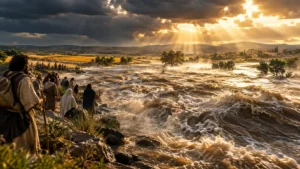
Psalm 23 offers an answer that is both simple and profound. David writes, “Yea, though I walk through the valley of the shadow of death, I will fear no evil: for thou art with me.” David does not suggest that the valley can always be avoided. Instead, he acknowledges that valleys are part of the human journey. What gives him confidence is not the absence of difficulty, but the presence of God within it.
When Blessing Becomes Too Dependent on Circumstances
It is easy to measure God’s goodness by our circumstances. When things are going well, we feel confident that God is near. When life becomes difficult, however, that confidence can become fragile. We may begin to wonder whether God has forgotten us or whether our struggles are somehow evidence of spiritual failure.
Yet Scripture presents a more mature understanding of blessing. Jesus, in Matthew 5, describes people who are mourning, poor in spirit, hungry for righteousness, and persecuted as “blessed.” His teaching challenges the assumption that blessing is always visible, comfortable, or easily explained.
Jesus was not suggesting that suffering is desirable. Rather, He was revealing that difficult circumstances do not have the final authority over a person’s relationship with God. A person can experience loss and still possess hope. A person can experience uncertainty and still have faith. A person can walk through grief and still experience God’s presence.
This is where the distinction becomes important: there is a difference between being blessed because circumstances are favorable and being blessed because God remains faithful when circumstances are not.
The Reality Behind the Faith
For many of us, this is not merely a theological idea. It is personal. There are seasons when we come to church, participate in worship, smile at familiar faces, and still carry questions that nobody else knows. We can appear strong while privately wondering how much longer we can keep going. We can encourage someone else to trust God while quietly wrestling with our own disappointment.
Faith does not require us to deny those experiences. It gives us a place to bring them.
David’s words are powerful because he does not deny the valley. He acknowledges it. Yet the valley does not become the defining feature of his experience. His attention shifts from the place he is walking through to the God who is walking with him.
“For thou art with me.”
That is the anchor.
When God Works Within the Circumstance
Sometimes our greatest frustration is that we ask God to change a circumstance, while God may also be working on something within us. We pray for the door to open, but the waiting develops patience. We pray for the problem to disappear, but the struggle develops resilience. We pray for clarity, but the uncertainty teaches us dependence. We ask why a particular season is happening, only to discover later that it shaped us in ways comfort never could.
This does not mean that God directly causes every painful experience or that suffering should be romanticized. Pain is real, and some seasons leave genuine wounds. But even in difficult circumstances, God can bring growth, meaning, and transformation.
Sometimes the blessing is not found in what God removes from our lives. Sometimes it is found in what He develops within us while we are still walking through it.
A Deeper Meaning of “Blessed”
Perhaps we need to broaden the way we use the word blessed. Being blessed does not mean that life will always be comfortable, predictable, or successful. It does not mean that every prayer will be answered according to our expectations:
- Sometimes blessing looks like an answered prayer. At other times, it looks like the strength to keep praying.
- Sometimes blessing is the door that opens. At other times, it is the wisdom to trust God when the door closes.
- Sometimes blessing is the celebration at the end of the journey. At other times, it is the grace that sustains us while we are still on the way.
The difference is not always found in what is happening around us. Sometimes it is found in knowing who is with us while it is happening.
If life is going well for you, celebrate it. Give thanks. Recognize the good gifts in your life without taking them for granted.
But if you are walking through a difficult season, do not assume that your struggle means God has abandoned you. Your circumstances may be changing, but God’s character has not.
The job may come, or you may have to wait. The relationship may be restored, or God may lead you in another direction. The answer may be yes, no, or not yet. You may understand what God is doing, or you may have to trust Him without understanding it.
Through every season, the anchor remains the same:
“For thou art with me.”
Perhaps that is the deeper meaning of being blessed. Not that we are promised a life without valleys, but that we are promised God’s presence in every valley we encounter.
Life changes. Circumstances change. People change. Plans change.
But God doesn’t.
And sometimes, the greatest blessing is not knowing that everything will work out exactly as we imagined. It is knowing that whatever happens, we will never have to walk through it alone.